
On this page
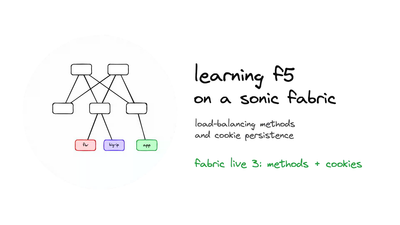
This is part 5 of a series on learning F5 BIG-IP Local Traffic Manager on a real data-centre fabric running on SONiC switches. Each part goes with a video on the LevelUP I.T. YouTube channel. Part 3 built the first virtual server, and part 4 took SNAT apart. This part measures the load-balancing methods.
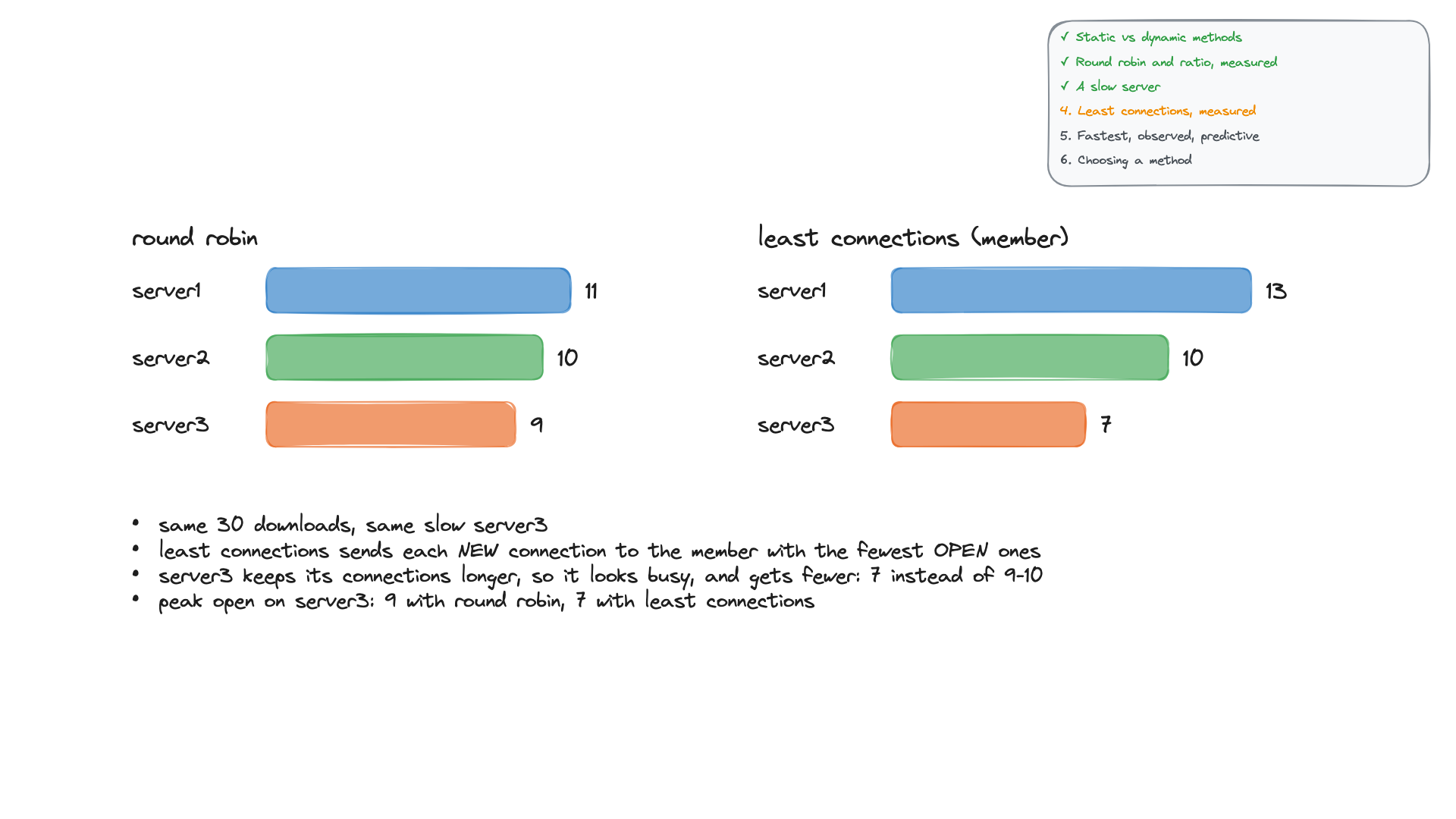
Same pool, same three servers, the same 30 downloads, and one server deliberately slow. Round robin still gave the slow server its full share: 11, 10, 9. Least connections noticed and sent it fewer: 13, 10, 7. Nothing else changed. This part measures round robin, ratio, least connections and fastest on the lab, counted on the BIG-IP itself, and explains observed, predictive and the pool settings around the method.
What you'll see
- Static vs dynamic methods, and member vs node.
- Round robin, 99 new connections: 33/33/33. Ratio 3:2:1 over 120: 62/39/19.
- A server made slow with
tc netem: about 7 seconds per 4 MiB download, against under one second for the others. - Round robin, least connections and fastest with that slow server, with open connections watched second by second.
- Observed and predictive, weighted and ratio least connections, slow ramp time, priority groups, limits and service-down action.
- How to choose a method, and how to test one so the numbers mean something.
Static vs dynamic
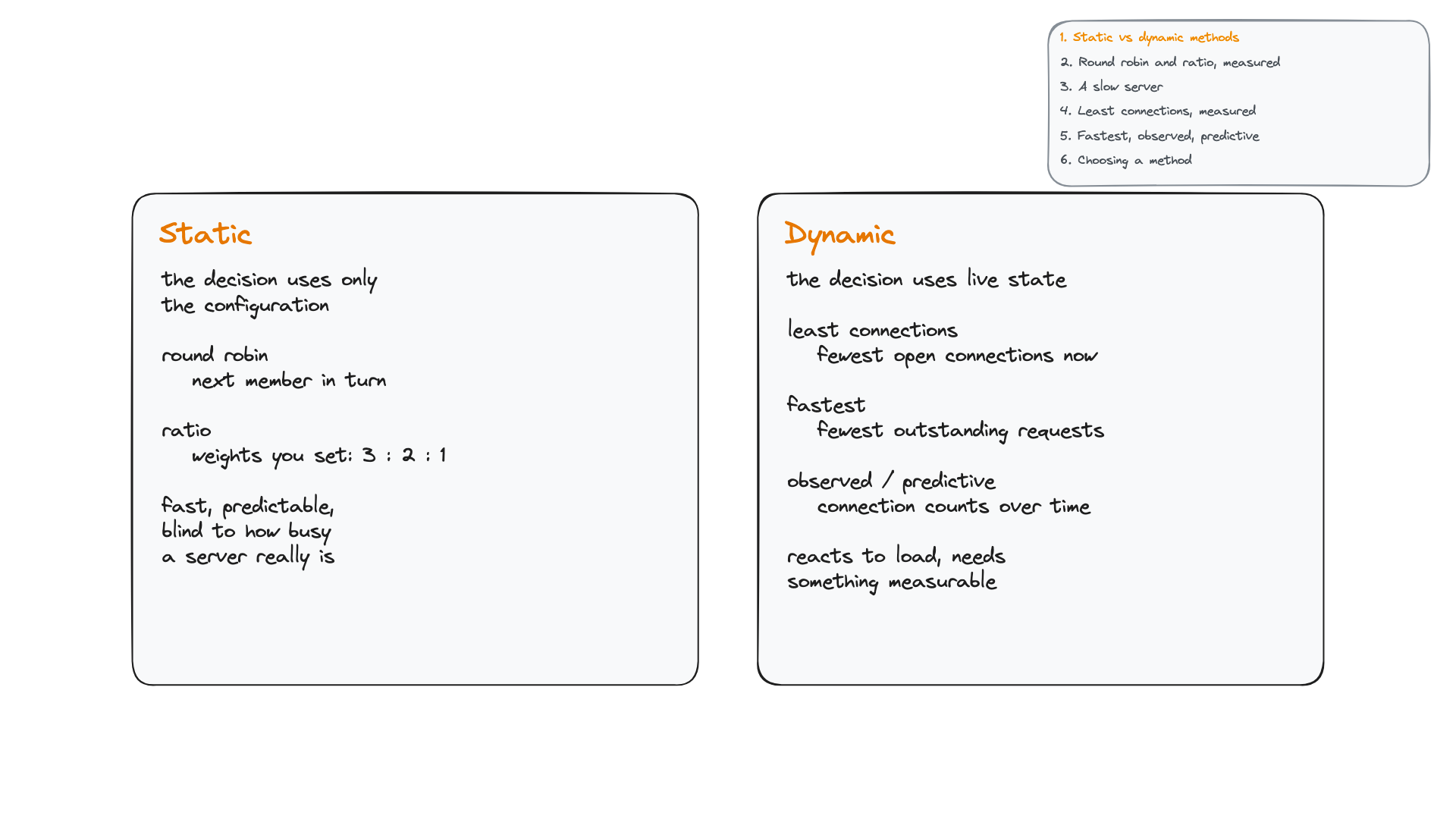
Every method answers one question: for this new connection, which pool member? Static methods answer from the configuration alone. Round robin takes the next member; ratio does the same with weights you set. Dynamic methods answer from live state. Least connections picks the member with the fewest open connections; fastest picks the quickest responder; observed and predictive turn connection counts over time into a ratio.
Most methods come in a member and a node version. A member method counts only inside this pool. A node method counts the server across every pool it's in. Every method decides once per new server-side connection, after the client side is up and, with an HTTP profile, after the request is read. Requests on a kept-alive connection follow it.