
On this page
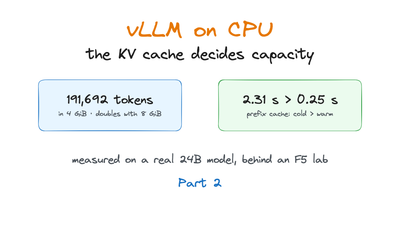
This is part 2 of Fabric Live, a series that builds an F5 BIG-IP lab on a SONiC EVPN fabric and configures it live on camera. Each part goes with a video on the LevelUP I.T. YouTube channel. How the lab itself is built (one file that holds every value, one script that brings the whole lab up, the Dell SONiC EVPN fabric, the Palo Alto firewall between the two VRFs, the three BIG-IPs and the validation run) is covered in the first video, Fabric Live 1. This part uses that lab to build the three classic BIG-IP deployment designs, two-armed, one-armed and nPath (direct server return), each one from a blank BIG-IP.
Three BIG-IPs on the same fabric, behind the same firewall, differ in one decision: where the BIG-IP is attached and what it does to the client's address. That decides where the server's reply goes, and a packet capture on the nPath BIG-IP shows every packet from the client and not one back.
What you'll learn
- What a deployment design decides when the servers' gateway is the fabric, not the BIG-IP.
- The building blocks: VLANs, self IPs, routes, FQDN nodes, pools, monitors, virtual servers; full proxy versus fastL4.
- Two-armed in tmsh: SNAT automap, ARP and EVPN for the VIP, per-TMM round robin, X-Forwarded-For, the web UI.
- One-armed: why SNAT is still mandatory, and why the servers are reachable around the BIG-IP.
- nPath: loose fastL4 with SYN cookies off, no translation, the VIP on loopback,
arp_ignore/arp_announce, the VXLAN-stretched VLAN, and the tcpdump proof. - The three side by side, and which one to choose.
What a deployment design decides
Every load balancer sits between clients and servers, but "between" can mean different things. Two parts of the exchange are the same in every design: the client always connects to the virtual server's address (the VIP), and the BIG-IP always picks a pool member and forwards the request to it. What differs is the reply.
A server answers whoever the packet came from. It looks at the source address of the request, and it sends the answer there: directly, at layer 2, if that address is on one of its own subnets, and otherwise to its default gateway. So the design decides three things at once:
- which network the BIG-IP shares with the servers;
- which address the servers see as the client (the real client, or an address of the BIG-IP);
- whether the reply passes back through the BIG-IP.
Get the reply path wrong and the connection never works: a reply that reaches the client from the server's own address matches no connection the client opened, and is discarded.
In this lab one fact shapes all three designs: the servers' default gateway is the fabric. Each server subnet's gateway is the anycast gateway on the server leaves (10.20.0.1, 10.30.0.1 and 10.40.0.1). The BIG-IP is not the servers' router. So by default a server's reply to a client goes to the fabric, not to the BIG-IP. Each design deals with that in its own way: two-armed and one-armed make the server reply to the BIG-IP by translating the client's source address, and nPath lets the reply go to the fabric on purpose.