On this page
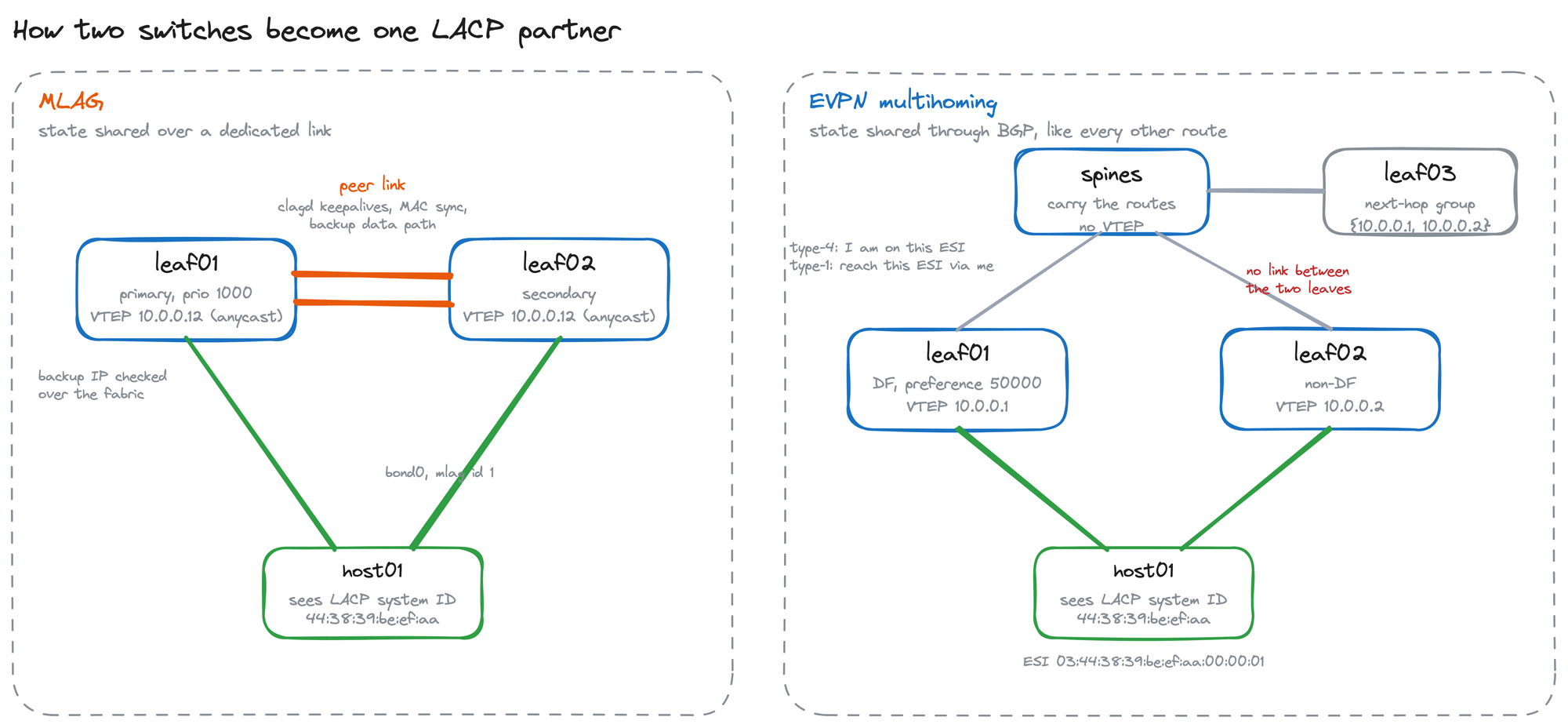
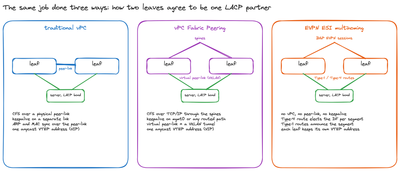
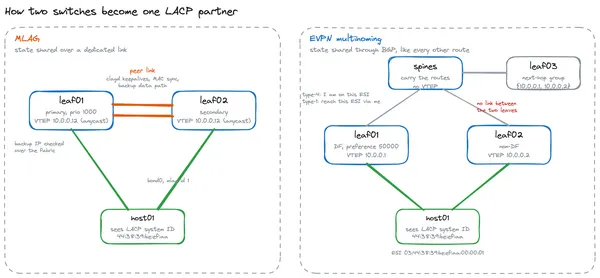
A server sits in a rack with two cables going to two different leaf switches, bonded into one interface with LACP, the link aggregation control protocol. The bond comes up against a single LACP system ID. Two switches have to agree to present it.
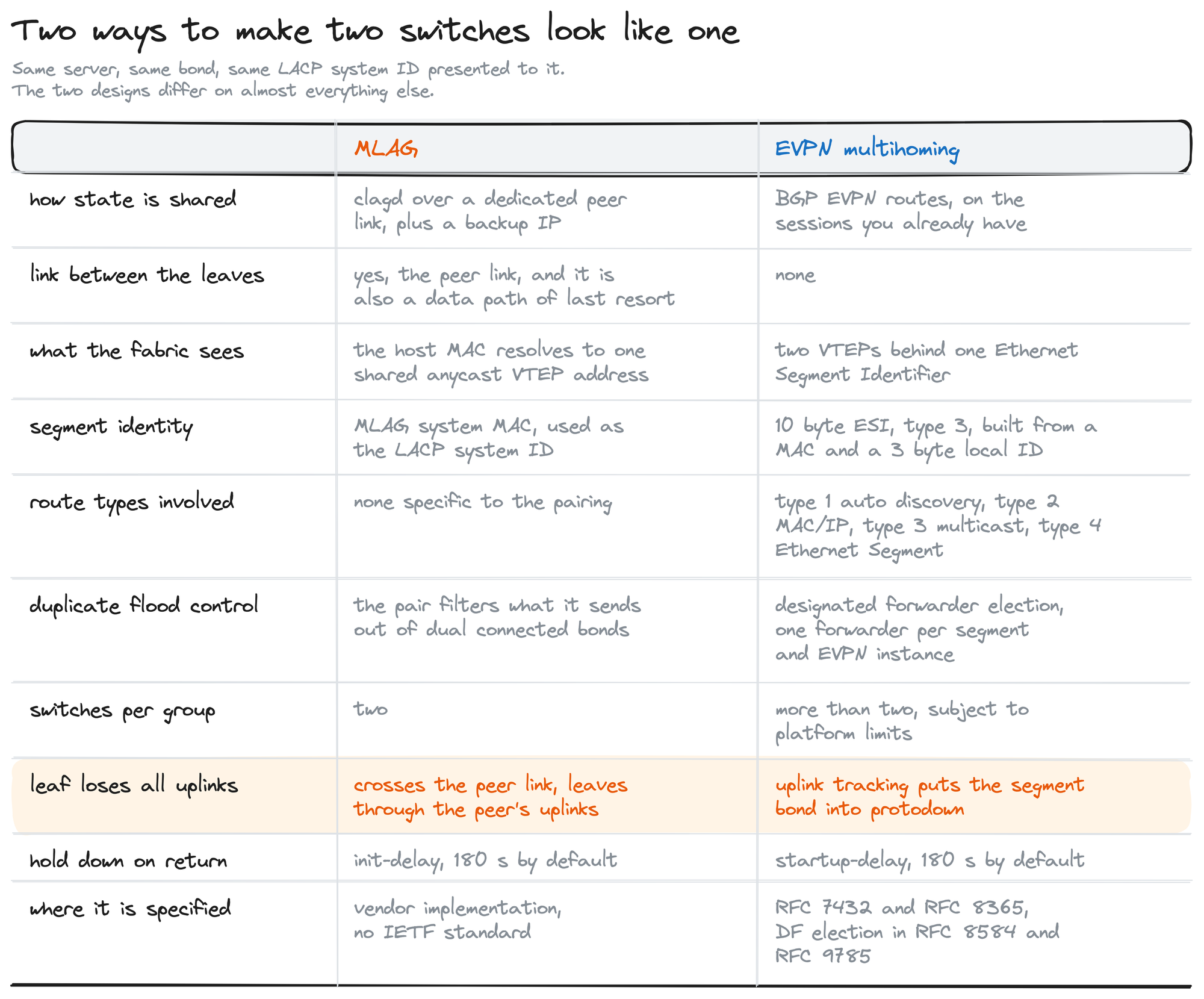
MLAG, multi-chassis link aggregation, gives the leaf pair a dedicated peer link and a private protocol to keep their state in sync. EVPN multihoming coordinates the same attachment without an MLAG peer link, using BGP route types carried on the sessions the fabric already runs. Both present one LACP system ID to the server. Both forward on both cables.
This article compares the two approaches, then measures them.
The lab
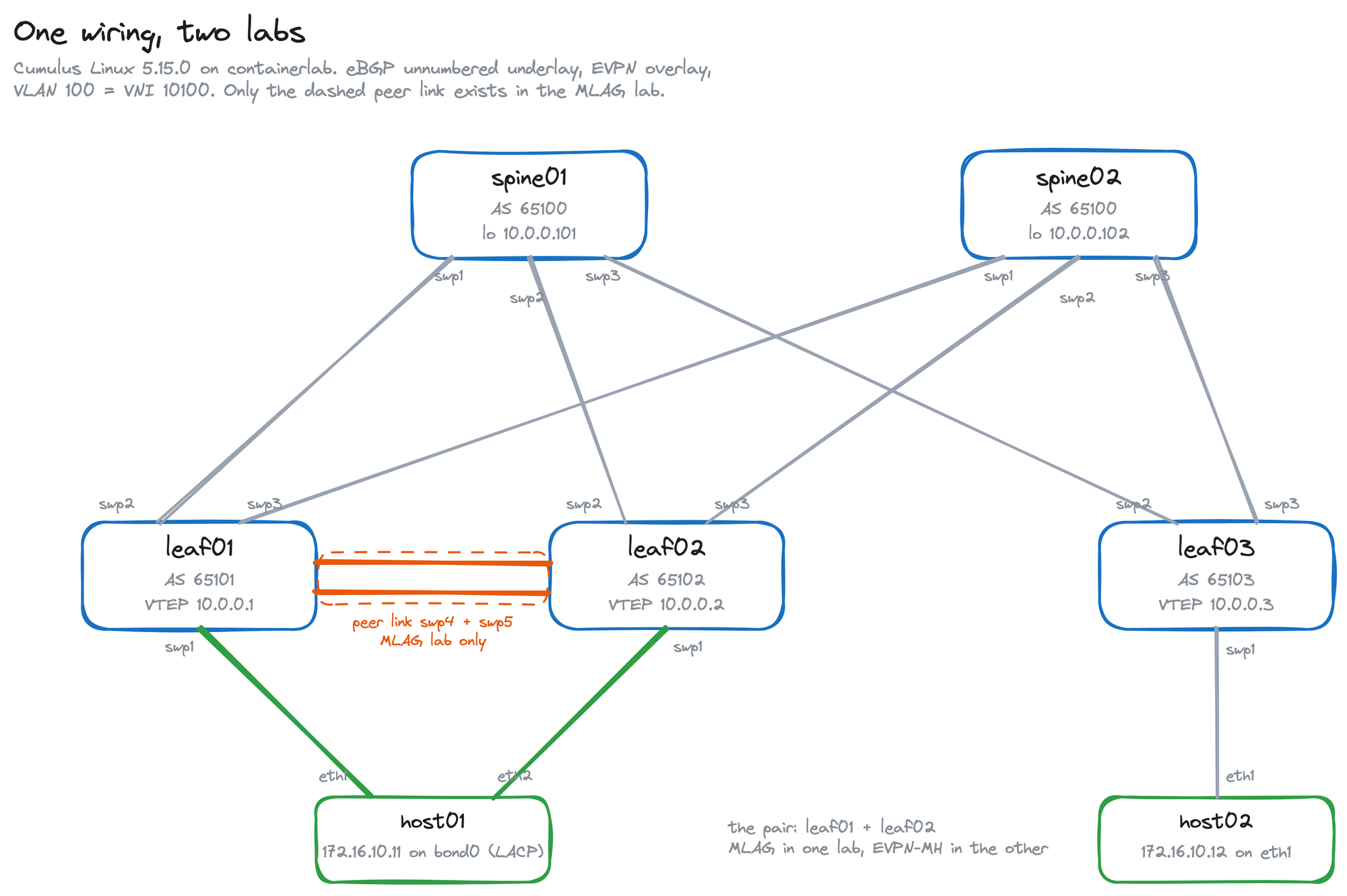
Cumulus Linux 5.15.0 with FRR 10.0.3, on containerlab: two spines, three leaves, two hosts. eBGP unnumbered underlay, EVPN overlay, VLAN 100 mapped to VNI 10100. host01 is dual homed to leaf01 and leaf02 with an 802.3ad bond running fast LACP and the layer3+4 transmit hash policy. host02 hangs off leaf03 and is the far end of every test.
Both labs come out of one generator, so the wiring, the addressing and the hosts are identical. The only structural difference is the peer link between leaf01 and leaf02, which exists in the MLAG lab and does not exist in the other.
The labs are at github.com/aramidetosin/evpn-mh-vs-mlag. Both topologies and all ten bootstrap configs come from one generator, and make up, make drills, make results reproduce everything below on your own host.