On this page
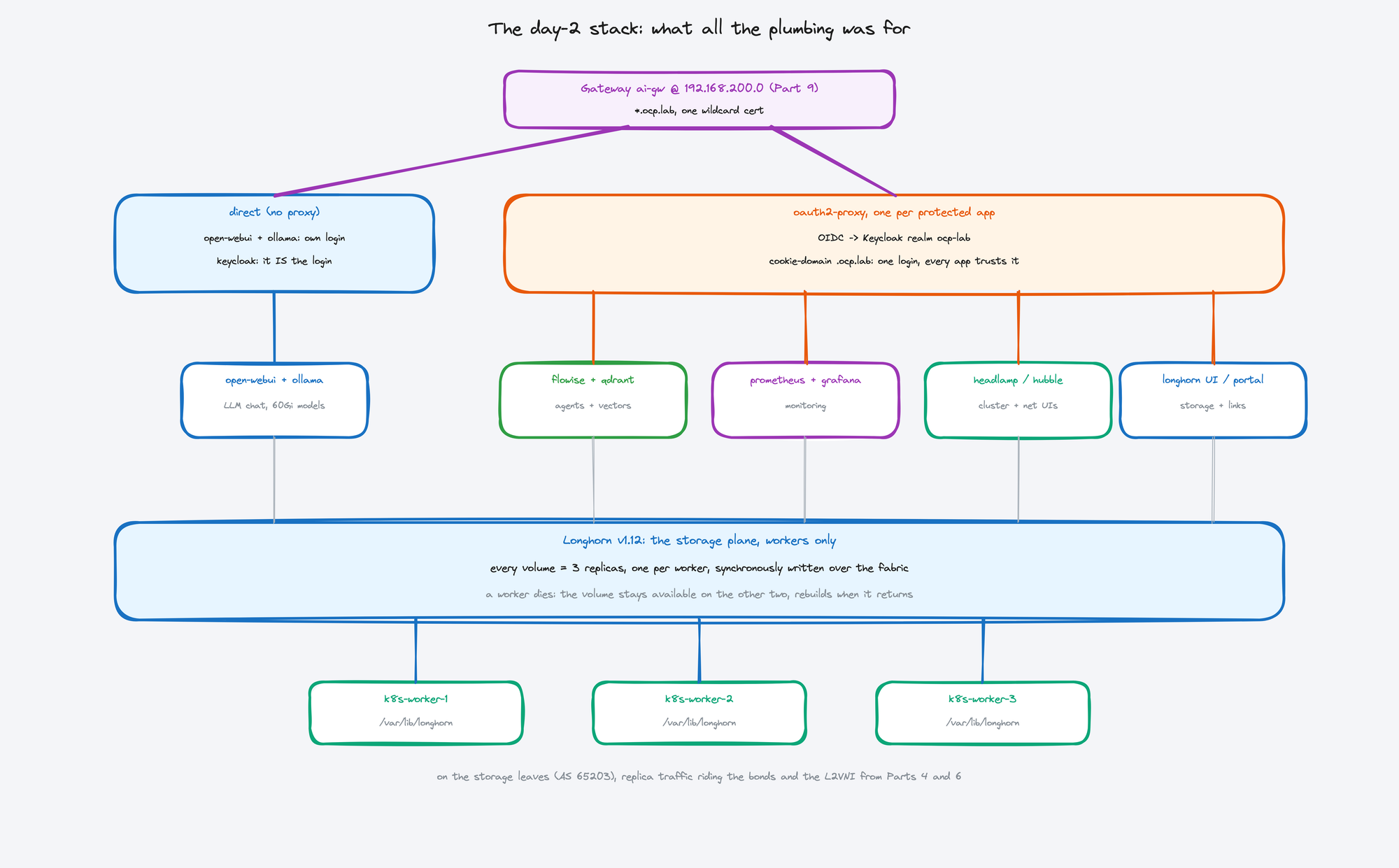
Nine parts of plumbing deserve a payoff. Part 9 left the lab with a front door and nothing behind it worth visiting; this part moves the tenants in: Longhorn gives the cluster real persistent storage, and a working AI stack, chat, models, agents, vector search, plus identity and monitoring, takes up residence behind the Gateway. By the end, the lab is not a demo. It is the environment I actually use.
Longhorn, and why only the workers
Longhorn (v1.12, installed straight from the release manifest) turns each node's local disk into distributed block storage: a volume is a set of replicas on different nodes, written synchronously, attached wherever the pod lands. The design choice that matters is which nodes get to hold replicas, and here it is only the three workers:
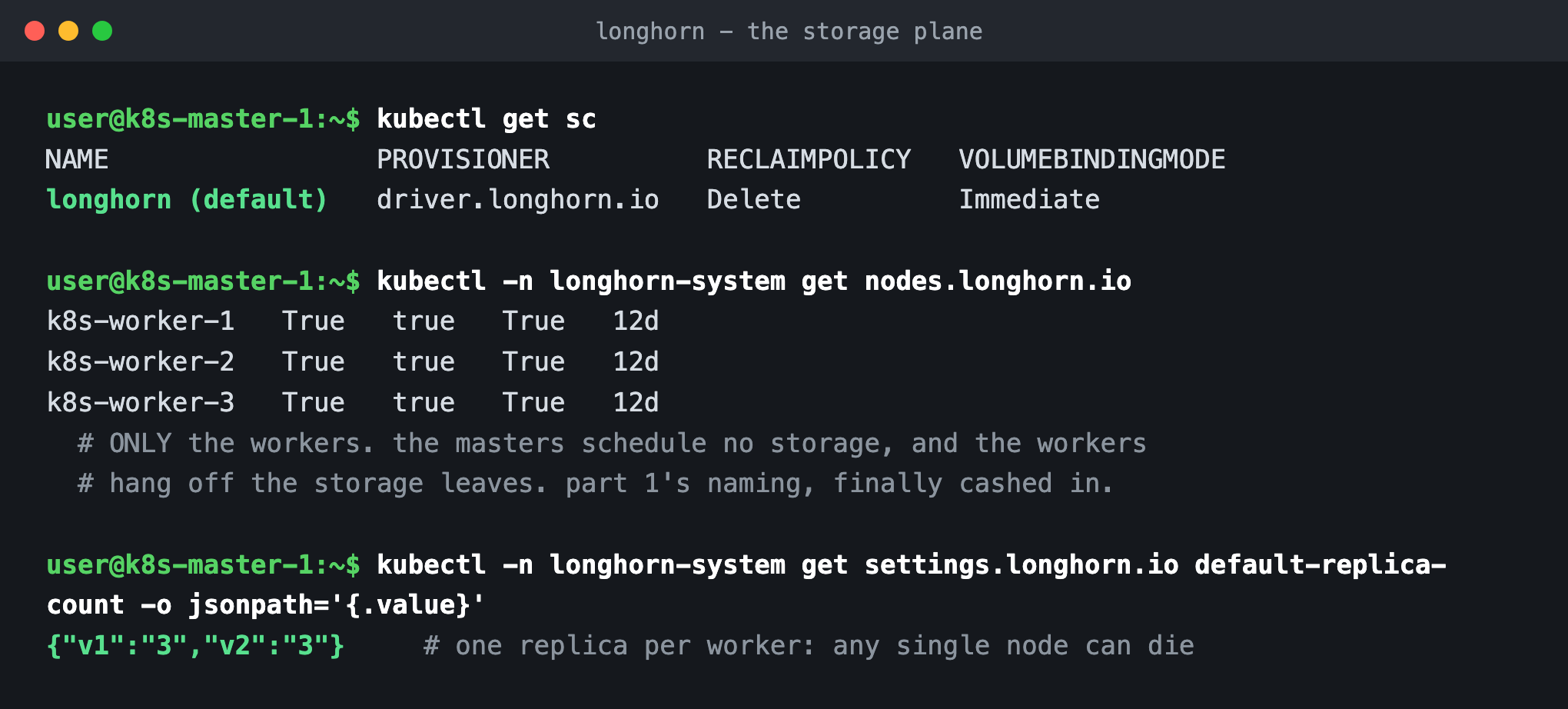
This is Part 1's placement policy cashing in one more time. The workers hang off the storage leaves, so every replica write crosses the bonds and the L2VNI that Parts 4 and 6 built, and the leaf pair named "storage" finally carries storage. Masters hold no replicas, which keeps etcd's disk latency away from Longhorn's rebuild storms, a separation that costs nothing on day one and saves an incident later. Replica count three with three workers means one replica per node: any single worker can die and every volume stays available, rebuilding when it returns.