On this page
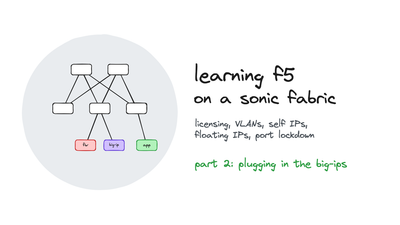
This is part 2 of a three-part series on a two-site edge for an AI inference API: part 1, a second pod network with Multus on the EVPN VXLAN fabric; part 2, the F5 BIG-IP edge: BGP route health, Advanced WAF and CIS; part 3, failover between the two sites with BIG-IP DNS.
An inference API that faces the internet needs four things at the edge: TLS, a WAF that understands the API, a route that's withdrawn when the service is unhealthy, and a load-balancing pool that tracks pods. This part builds all four on an F5 BIG-IP and tests each one under failure.
This part builds that edge in front of llama.cpp and then fails it. The outputs come from one recorded run plus short addenda against the same lab. Three settings looked correct and weren't: one failed a test, and two showed up on inspection.
The lab
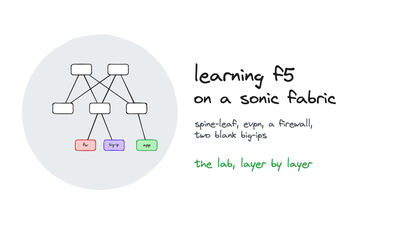
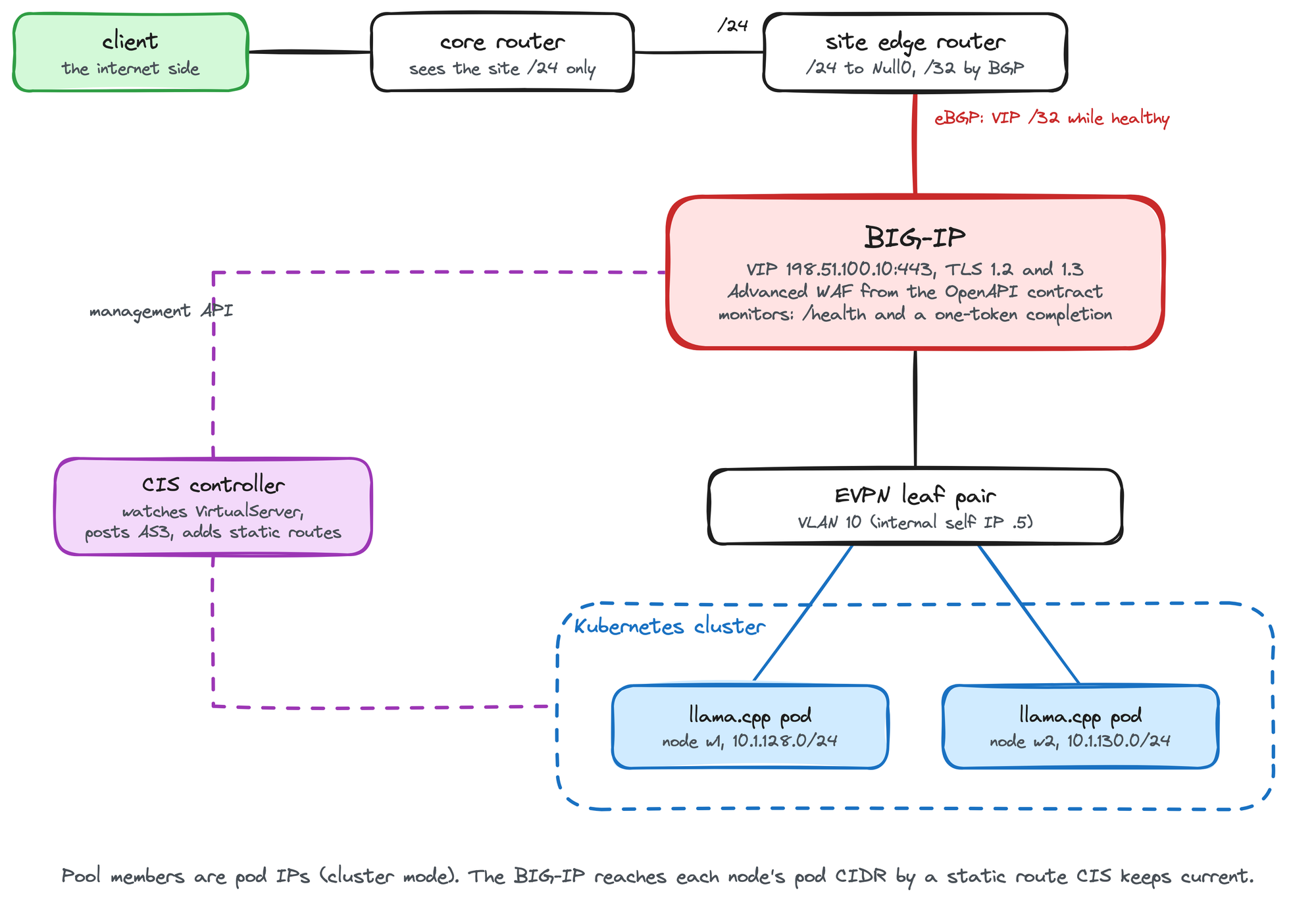
The site is the one from part 1: an EVPN VXLAN fabric on Enterprise SONiC, a kubeadm cluster with Cilium, and two llama.cpp replicas serving a small model through an OpenAI-compatible API. In front of it sit a BIG-IP 17.5.1 and an edge router, which peers eBGP with the BIG-IP and with an internet core. F5 Container Ingress Services (CIS) 2.20.4.1 runs in the cluster and drives the BIG-IP through AS3 3.56.
What the run shows
- The BIG-IP advertises the VIP by BGP and withdraws it when the backends fail. The monitors timed out 16 seconds after the break, and the route was first seen gone from the edge at 40 seconds.
- CIS builds the virtual server from a Kubernetes resource, with pod IPs as pool members and one static route per node.
- The pool monitors send a one-token completion as well as a health check.
- An Advanced WAF policy generated from the API's OpenAPI contract blocks a wrong method, an unknown URL, an extra JSON field and a request with too many messages.
- A legitimate prompt that quotes SQL trips two signatures. Those two are disabled on the prompt field only, and an XSS payload in the same field is still blocked.
- Three settings looked correct and weren't. A host-based virtual server kept its route advertised with no pods. Monitor strings lost their quotes, and the pool needs only one of its two monitors to pass.